Your Child’s First Dental Visit: A Complete Parent Guide
Kids Dental • 8 min read
As a parent, one of the most common questions you’ll face is: “When should I schedule my child’s first dental visit?” The answer may surprise you. The American Academy of Pediatric Dentistry (AAPD) recommends that a child should visit the dentist as soon as the first primary tooth erupts and no later than 12 months of age. Yet studies published in the Journal of Pediatric Dentistry reveal that most children report for their first dental visit only after 7 years of age — and often only when problems like tooth decay and tooth pain have already set in. This comprehensive guide will walk you through everything you need to know about your child’s first dental visit, from timing and preparation to what actually happens during the appointment and why choosing the right pediatric dentist in Kanpur matters for your child’s lifelong oral health.
When Should Your Child Have Their First Dental Visit?
The American Academy of Pediatric Dentistry (AAPD) and the Centers for Disease Control and Prevention (CDC) both provide clear, evidence-based guidelines: your child’s first dental visit should happen within six months of the eruption of their first tooth, or by their first birthday — whichever comes first. For most babies, the first tooth appears between 4 and 7 months of age, which means the first dental visit should typically occur around 6 to 12 months.
Why so early? Even a single tiny tooth can develop decay. Early childhood caries (ECC), also known as baby bottle tooth decay, is one of the most common chronic diseases in children. Research from the National Institute of Dental and Craniofacial Research shows that early preventive dental visits can reduce the need for restorative and emergency dental treatments by up to 40%. By establishing a “dental home” early, you create a foundation for preventive care, early detection, and a positive relationship with oral health that lasts a lifetime.
Baby Teeth Eruption Timeline
| Tooth Type | Eruption Age | Number of Teeth | Function |
|---|---|---|---|
| Lower Central Incisors | 6–10 months | 2 | Biting & cutting food |
| Upper Central Incisors | 8–12 months | 2 | Biting & speech development |
| Upper Lateral Incisors | 9–13 months | 2 | Biting & aesthetics |
| Lower Lateral Incisors | 10–16 months | 2 | Biting & jaw alignment |
| First Molars | 13–19 months | 4 | Chewing & maintaining space |
| Canines (Cuspids) | 16–22 months | 4 | Tearing food & guiding bite |
| Second Molars | 25–33 months | 4 | Chewing & space holding |
Understanding the eruption timeline helps you anticipate when each tooth will appear and schedule dental check-ups accordingly. If your child hasn’t had any teeth erupt by 12 months, a dental evaluation is still recommended to assess their oral development.
What to Expect at Your Child’s First Dental Visit
Many parents worry that the first dental visit will be stressful for their child. In reality, a child’s first dental visit is designed to be gentle, quick, and educational. According to Stanford Medicine Children’s Health, the first visit typically lasts only 30 to 45 minutes. Here’s a step-by-step walkthrough of what happens during the appointment:
Step 1: Warm Welcome & Getting Comfortable
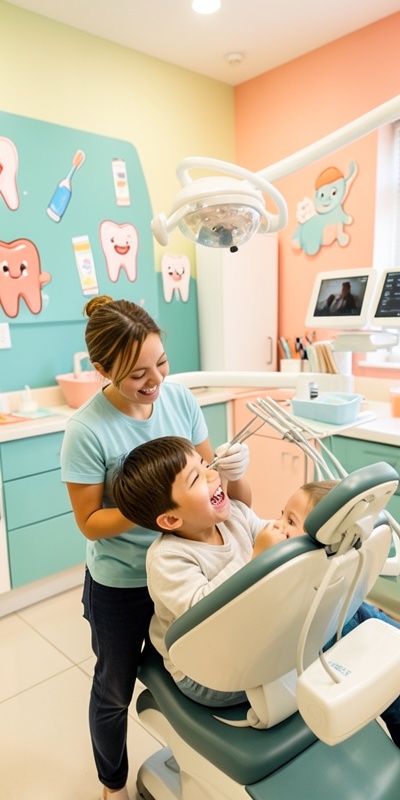
Your pediatric dentist will greet you and your child in a friendly, child-friendly environment. The clinic will have colorful decor, toys, and a welcoming atmosphere to help your little one feel at ease. The dentist may let your child explore the dental chair and touch some instruments to reduce fear of the unknown.
Step 2: Medical & Dental History Review
The dentist will ask about your child’s medical history, any medications, feeding habits (breastfeeding, bottle use, pacifier use), thumb-sucking patterns, and family dental history. Be honest and thorough — this information is critical for personalized care recommendations.
Step 3: Gentle Oral Examination
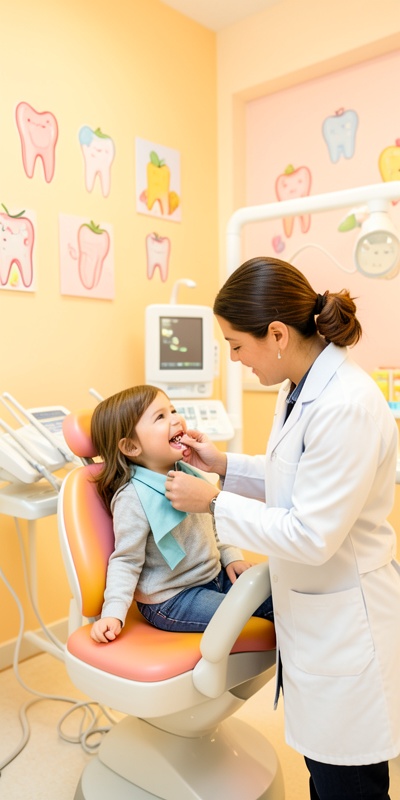
For infants and toddlers, the dentist may use a “knee-to-knee” exam technique where your child sits on your lap, facing you, and leans back onto the dentist’s lap. This position is comforting because your child can see you and feel secure. The dentist will carefully examine the teeth, gums, jaw, and soft tissues for any signs of decay, developmental issues, or abnormalities.
Step 4: Cleaning & Fluoride Application
If needed, the dentist will gently clean any deposits on the teeth and may apply a fluoride varnish to strengthen the enamel and protect against cavities. The CDC confirms that fluoride varnish applied by a dental professional can prevent about 33% of cavities in primary teeth.
Step 5: Personalized Guidance & Care Plan
The dentist will provide personalized advice on brushing techniques, teething management, nutrition and diet counseling, fluoride needs, and when to schedule the next visit. This is your chance to ask any questions about your child’s oral development.
How to Prepare Your Child for Their First Dental Visit
Preparation is the key to a smooth and stress-free first dental visit. Children pick up on their parents’ emotions, so if you’re anxious, your child will be too. Here are proven strategies to make the experience positive:
🧸 Start at Home
Begin cleaning your baby’s gums with a soft cloth even before teeth appear. Once the first tooth erupts, use a small, soft-bristled toothbrush with a rice-grain amount of fluoride toothpaste. This familiarizes your child with oral care routines early.
📖 Read Storybooks
Read children’s books about visiting the dentist to normalize the experience. Books like “The Berenstain Bears Visit the Dentist” or “Peppa Pig Goes to the Dentist” present dental visits as fun and positive adventures.
🎭 Role Play at Home
Play “dentist” with your child using a stuffed animal or doll. Let your child be the dentist and examine the toy’s teeth, then switch roles. This playful rehearsal reduces fear of the unknown and makes the real visit feel familiar.
⏰ Pick the Right Time
Schedule the appointment when your child is well-rested and happy — usually in the morning after breakfast or after a nap. Avoid scheduling during typical nap or meal times when your child is more likely to be cranky.
😊 Stay Positive & Calm
Use positive language. Instead of saying “it won’t hurt,” say “the dentist will count your teeth and make them sparkle!” Avoid words like “pain,” “shot,” or “drill.” Your attitude sets the tone — stay relaxed and enthusiastic.
📋 Prepare Your Questions
Write down questions about teething, thumb sucking, pacifier use, diet, fluoride, and brushing techniques. Having a list ensures you don’t forget important concerns during the visit.
Parent’s Pre-Visit Checklist
Common Pediatric Dental Issues Parents Should Know
Understanding common dental problems that affect young children helps you recognize early warning signs and seek timely treatment. Here are the most prevalent pediatric dental issues, along with their causes and prevention strategies:
Early Childhood Caries
Decay caused by prolonged exposure to sugary liquids. Prevent by avoiding bedtime bottles with milk or juice and cleaning gums after feeds.
Thumb Sucking Issues
Prolonged thumb sucking after age 4 can cause bite problems, open bite, and tooth misalignment. Early dental guidance helps manage this habit.
Teething Discomfort
Swollen gums, drooling, and irritability are normal. Use chilled teething rings, gentle gum massage, and age-appropriate pain relief.
Tongue Tie & Lip Tie
Restricted frenulum can affect breastfeeding, speech, and dental development. Early evaluation by a pediatric dentist is essential.
Dental Emergencies
Falls and accidents can cause tooth fractures or avulsion. Having a dental home ensures immediate professional care when emergencies happen.
Enamel Hypoplasia
Weak or thin enamel makes teeth prone to rapid decay. Regular dental visits allow early detection and protective treatments like sealants.
Prevention Effectiveness Comparison
Why Growing Smiles Is the Best Pediatric Dentist in Kanpur
When it comes to your child’s first dental visit, choosing the right pediatric dentist makes all the difference. Growing Smiles in Kanpur is specially designed for children, combining advanced dental technology with a warm, playful environment that makes every child feel safe and excited about their dental care. Here’s why Growing Smiles stands out as the leading pediatric dentist in Kanpur:
🏥 Child-Friendly Environment
Our clinic features colorful, playful interiors with kid-sized furniture, entertainment zones, and a welcoming atmosphere designed to eliminate dental anxiety from the very first step inside.
👨⚕️ Specialized Pediatric Dentists
Our dentists have additional years of specialized training in pediatric dentistry, making them experts in managing children’s behavior, anxiety, and unique dental needs with patience and skill.
⚡ Painless Dentistry Technology
We use advanced laser dentistry and minimally invasive techniques that significantly reduce discomfort and treatment time, ensuring a fear-free experience for your little one.
🛡️ Comprehensive Preventive Care
From fluoride treatments and dental sealants to personalized oral hygiene coaching, we focus on prevention-first strategies that keep your child’s smile healthy for years to come.
👨👩👧👦 Family-Centered Approach
We educate parents alongside treating children. You’ll leave every appointment with actionable knowledge about your child’s oral development, dietary recommendations, and home care techniques.
🚨 Emergency Dental Care
Dental emergencies don’t wait for appointments. Growing Smiles provides prompt emergency care for knocked-out teeth, fractures, and other urgent dental situations so your child gets immediate relief.
“Every child deserves a healthy smile. The first dental visit isn’t just about checking teeth — it’s about building trust, establishing a dental home, and giving your child the foundation for a lifetime of confident smiles.”
Frequently Asked Questions About Your Child’s First Dental Visit
Key Takeaways
- ✓ Schedule the first dental visit by age 1 or within 6 months of the first tooth erupting — this is the AAPD and CDC recommendation
- ✓ Prepare at home with storybooks, role play, and positive language to make the visit comfortable and stress-free
- ✓ The first visit is quick and gentle — typically 30 to 45 minutes focusing on examination, cleaning, fluoride, and parent education
- ✓ Early dental visits prevent future problems — children who see a dentist by age 1 have significantly lower treatment costs and fewer cavities
- ✓ Choose a specialized pediatric dentist like Growing Smiles in Kanpur for expert, child-centered care in a welcoming environment
- ✓ Baby teeth matter — they’re essential for nutrition, speech, and guiding permanent teeth into proper alignment
Your child’s first dental visit is a milestone that sets the tone for their entire relationship with oral health. By starting early, choosing the right pediatric dentist, and preparing both yourself and your child, you’re investing in a lifetime of healthy, confident smiles. Don’t wait for problems to arise — be proactive and give your child the best start possible.
Ready to Book Your Child’s First Dental Visit?
Give your child the gift of a healthy smile. Growing Smiles — Kanpur’s trusted pediatric dental clinic — is ready to welcome you and your little one. Our friendly team, child-centered approach, and painless technology ensure that the first dental visit is a positive experience for the whole family. Book your appointment today and take the first step toward a lifetime of bright, confident smiles!
Book Your Child’s First Dental VisitRelated Articles
Your Child’s First Dental Visit: A Complete Parent Guide
Your Child’s First Dental Visit: A Complete Parent Guide Kids Dental • 8 min read As a parent,…
Kids Dental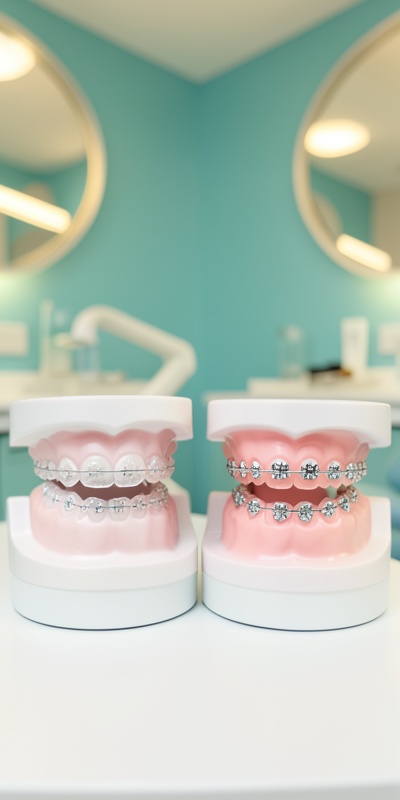
Clear Aligners vs Braces: Best Teeth Straightening Option
Cosmetic Care • 8 min read Clear Aligners vs Braces: Which Teeth Straightening Option is Right for You?…
Cosmetic Care
7 Daily Oral Hygiene Tips for a Lifetime of Healthy Smiles
Oral Health Tips • 8 min read 7 Daily Oral Hygiene Habits for a Lifetime of Healthy Smiles…
Oral Health Tips