Cosmetic Care • 8 min read
Clear Aligners vs Braces: Which Teeth Straightening Option is Right for You?
Your complete guide to choosing the best orthodontic treatment — with facts, data, and expert insights.
If you have been thinking about straightening your teeth, you are certainly not alone. Over 12 million people worldwide have chosen clear aligners, and the global orthodontic market is projected to surpass $23 billion by 2027. But when it comes to clear aligners Kanpur residents trust versus traditional braces, the decision can feel overwhelming. With clear aligners now dominating 70% of orthodontic treatments in many regions, understanding your teeth alignment options has never been more important. This guide breaks down every factor — from cost and comfort to treatment timelines and cutting-edge laser-assisted alignment — so you can make an informed, confident choice for your smile.
Understanding Your Teeth Alignment Options
Clear aligners are custom-made, transparent plastic trays that fit snugly over your teeth and gently shift them into the desired position over time. Each set of aligners is worn for approximately 1–2 weeks before progressing to the next stage. Unlike traditional braces, they are virtually invisible and can be removed for eating, brushing, and flossing.
Traditional braces, on the other hand, consist of metal or ceramic brackets bonded to each tooth and connected by wires and elastic bands. They apply continuous pressure to move teeth and can correct even the most complex orthodontic issues, including severe crowding, significant bite discrepancies, and rotated teeth.
Clinical research shows that traditional braces achieve roughly a 90% success rate for effective corrections, while clear aligners follow closely at approximately 88%. Both are highly effective — the real question is which one aligns better with your lifestyle, budget, and clinical needs.
Side-by-Side Comparison: Clear Aligners vs Braces
| Feature | Clear Aligners | Traditional Braces |
|---|---|---|
| Visibility | Nearly invisible | Visible (metal or ceramic) |
| Removability | Yes — remove for eating & cleaning | No — fixed to teeth |
| Treatment Time | 6–18 months (average 12–14) | 18–36 months (average 24) |
| Comfort Level | High — smooth plastic, no wires | Moderate — wires can cause irritation |
| Cost Range (India) | ₹60,000 – ₹2,50,000 | ₹35,000 – ₹1,50,000 |
| Success Rate | ~88% | ~90% |
| Diet Restrictions | None (remove before eating) | Avoid hard, sticky foods |
| Oral Hygiene | Easy — brush & floss normally | Challenging — special tools needed |
| Compliance Required | High — must wear 20–22 hrs/day | Low — always in place |
| Best For | Mild to moderate cases | Severe & complex cases |
| Emergency Visits | Rare | Common (broken brackets/wires) |
Cost Comparison: Clear Aligners vs Braces in India
Understanding the financial aspect is crucial when evaluating teeth alignment options. Clear aligners typically cost more due to the advanced 3D scanning, custom manufacturing, and iterative tray sets involved. Traditional braces, while generally more affordable upfront, may incur additional costs for emergency repairs and more frequent visits.
Who Is a Good Candidate for Clear Aligners?
Clear aligners in Kanpur and across India are an excellent choice for many patients, but they are not a universal solution. Understanding who benefits most from each option helps set realistic expectations and avoids treatment setbacks.
- ✓ Clear aligners are ideal for: Mild to moderate crowding, small gaps, minor bite issues, relapse after previous orthodontic treatment, and patients who prioritize aesthetics and convenience.
- ✓ Traditional braces are recommended for: Severe crowding, significant overbites or underbites, crossbites, severely rotated teeth, jaw alignment issues, and cases requiring vertical tooth movement.
- ✓ Age factor: Clear aligners are suitable for teens and adults with fully erupted permanent teeth. Children with mixed dentition typically require traditional braces for comprehensive correction.
- ✓ Compliance is critical: Clear aligners must be worn for 20–22 hours per day. Patients who struggle with consistent wear may see delayed or incomplete results — in such cases, fixed braces may be more effective.
The best way to determine your candidacy is through a professional evaluation. At Growing Smiles Dental Clinic Kanpur, our orthodontists use advanced 3D digital scanning to assess your teeth and create a personalized treatment plan tailored to your unique dental anatomy.
Timeline Expectations: How Long Does Treatment Take?
One of the most frequently asked questions about teeth alignment options is: “How long will it take?” Treatment duration varies based on the complexity of your case, your age, and how well you comply with your treatment plan. Here is a realistic breakdown:
Clear Aligners Timeline
Mild cases (minor spacing/crowding): 6–9 months
Moderate cases: 12–18 months
Complex cases: 18–24 months
Key advantage: Visible improvement often starts within the first 6–8 weeks.
Traditional Braces Timeline
Mild cases: 12–18 months
Moderate cases: 18–24 months
Complex cases: 24–36+ months
Key advantage: Works continuously without patient compliance dependency.
According to research published in the Journal of Clinical Orthodontics, clear aligners have been proven to be a faster and significantly more efficient way to straighten teeth for appropriate cases when compared to traditional braces. However, this speed advantage only holds true when patients wear their aligners as prescribed. Missing even a few hours daily can extend the overall timeline significantly.
Laser-Assisted Alignment: Accelerating Your Smile Transformation
One of the most exciting advancements in modern orthodontics is Low-Level Laser Therapy (LLLT), also known as photobiomodulation. This technology uses specific wavelengths of light to stimulate cellular activity in the bone and tissues surrounding your teeth, potentially accelerating tooth movement by 30–50% compared to conventional methods alone.
A landmark study published in the NIH National Library of Medicine found that low-level laser irradiation significantly accelerated orthodontic tooth movement, with canine retraction being significantly greater on the laser-treated side compared to the control side. A 2024 review in the Applied Sciences Journal further confirmed that low-level laser therapy and surgical methods are effective techniques in accelerating tooth movement during orthodontic treatment.
- ✓ Reduced treatment time: LLLT can shorten orthodontic treatment by 3–6 months on average by accelerating bone remodeling around moving teeth.
- ✓ Pain reduction: Laser therapy has been shown to reduce orthodontic pain and discomfort by stimulating endorphin release and reducing inflammation in the periodontal ligament.
- ✓ Non-invasive procedure: Unlike surgical acceleration methods (corticotomy, piezocision), LLLT is completely non-invasive — it involves simply shining a low-energy laser on the gums for a few minutes during each visit.
- ✓ Works with both options: Laser-assisted acceleration can be combined with both clear aligners and traditional braces, making it a versatile enhancement regardless of your chosen treatment path.
At Growing Smiles Dental Clinic Kanpur, we integrate laser-assisted orthodontic acceleration into our treatment protocols, giving patients the option to potentially complete their smile transformation months sooner than with conventional methods alone.
“The best orthodontic treatment is not about choosing the most popular option — it is about choosing the one that aligns with your clinical needs, lifestyle, and commitment level.”
Cost Factors: What Influences Your Treatment Price?
The cost of orthodontic treatment varies widely based on several important factors. When exploring teeth alignment options, it is essential to look beyond the sticker price and understand what drives these costs:
1. Complexity of Your Case: Mild spacing or minor crowding requires fewer aligner trays or shorter treatment with braces, reducing overall cost. Complex cases involving bite correction or severe crowding demand more time, more materials, and more expertise.
2. Brand and Technology: Premium clear aligner systems like Invisalign use patented SmartTrack material and ClinCheck 3D planning software, which costs more than generic alternatives. However, the precision and predictability they offer can reduce the total number of aligners needed.
3. Duration of Treatment: Longer treatment periods mean more aligner sets (for clear aligners) or more adjustment visits (for braces), increasing the cumulative cost.
4. Geographic Location: Treatment costs in metro cities like Delhi and Mumbai tend to be 20–40% higher than in Tier-2 cities like Kanpur. This makes seeking clear aligners in Kanpur a cost-effective option without compromising on quality.
5. Retention and Follow-Up: Post-treatment retainers are essential for both aligners and braces. Factor in the cost of retainers (typically ₹5,000–₹15,000) and any refinement aligners that may be needed after the initial treatment.
Patient Satisfaction: Clear Aligners vs Braces
Patient satisfaction surveys reveal interesting patterns. While both treatments achieve similar clinical outcomes, clear aligner patients consistently report higher satisfaction in comfort, aesthetics, and convenience categories. However, braces patients often report higher satisfaction with the discipline and compliance aspect, since the treatment works continuously without requiring personal adherence.
Key Takeaways: Making Your Decision
Choosing between clear aligners and traditional braces does not have to be a stressful decision. Here are the essential points to guide your choice:
- ✓ Choose clear aligners if you have mild to moderate alignment issues, prioritize aesthetics, can commit to wearing them 20–22 hours daily, and want fewer dietary restrictions.
- ✓ Choose traditional braces if you have severe crowding, complex bite issues, are treating a younger patient, or need a compliance-free solution that works around the clock.
- ✓ Consider laser acceleration regardless of your choice — it can reduce treatment time by 30–50% and minimize discomfort during the process.
- ✓ Always consult a qualified orthodontist — digital 3D scans and professional evaluations are the only reliable way to determine the best treatment for your unique dental structure.
Whether you choose clear aligners or traditional braces, the most important step is taking that first step toward the smile you deserve. Both treatments have decades of clinical success behind them, and with modern innovations like laser-assisted acceleration, achieving your ideal smile has never been faster or more comfortable.
Ready to Start Your Smile Journey?
Get a free alignment assessment at Growing Smiles Dental Clinic Kanpur. Our expert orthodontists use advanced 3D digital scanning to evaluate your teeth and create a personalized treatment plan — whether clear aligners or braces are right for you.
Book Your Free AssessmentRelated Articles

Your Child’s First Dental Visit: A Complete Parent Guide
Your Child’s First Dental Visit: A Complete Parent Guide Kids Dental • 8 min read As a parent,…
Kids Dental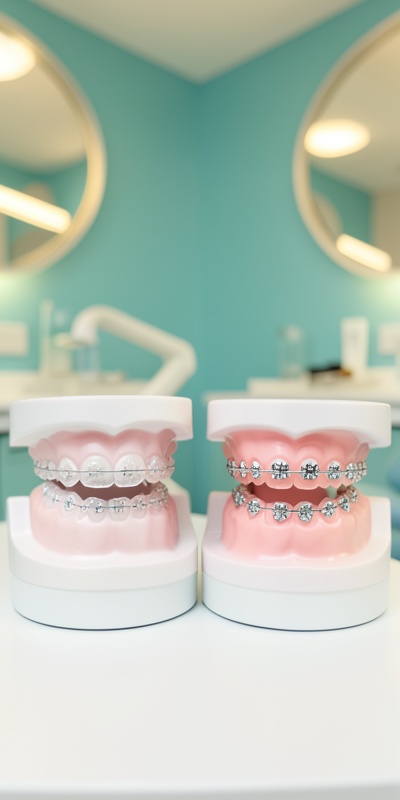
Clear Aligners vs Braces: Best Teeth Straightening Option
Cosmetic Care • 8 min read Clear Aligners vs Braces: Which Teeth Straightening Option is Right for You?…
Cosmetic Care
7 Daily Oral Hygiene Tips for a Lifetime of Healthy Smiles
Oral Health Tips • 8 min read 7 Daily Oral Hygiene Habits for a Lifetime of Healthy Smiles…
Oral Health Tips